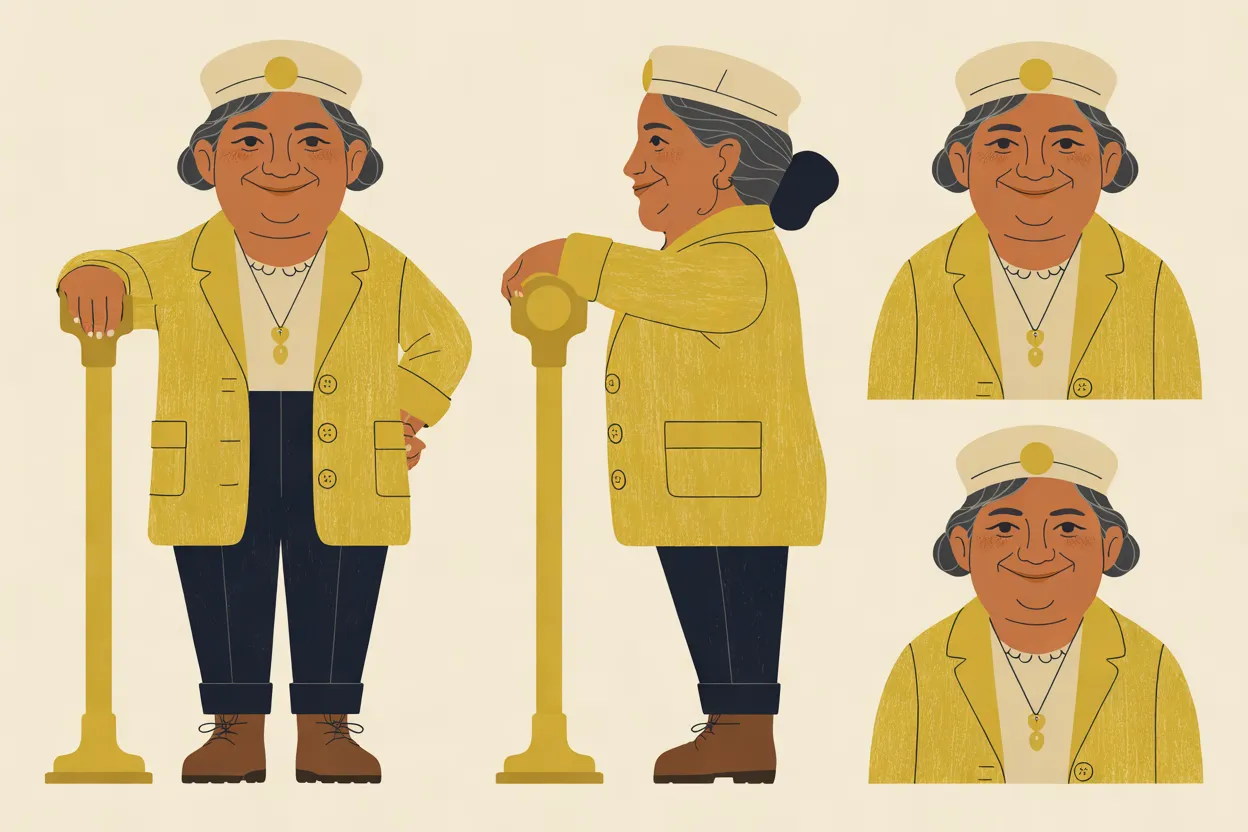
A scene from your world
Ten past noon
The Noon Conductor swings up onto the last carriage as the engine gives its first long sigh of steam at the Landing. The chalkboard by the water tank says Noon, which is the whole timetable, and the sun agrees: it is straight overhead, and the shadows of the two cream carriages have crawled underneath them to wait it out. She works down the benches with the brass punch. Click, and a ticket gets its small sun. Click. Click. The punched-out suns go out of the open side of the carriage and away on the trade wind, east, over the harbor.
The line pulls away from the harbor and starts up between the fields, rows of spiky gold-crowned plants combed straight up the slope. Halfway along the second field a man lifts a hand. There is no platform there and no stop on any timetable, and she pulls the cord anyway. He hands up a crate of the season’s first ripe fruit and climbs aboard after it, and when he has no ticket, she punches the label on the crate.
Then the switchbacks. The hill is too steep to take straight, so the line takes it in a zigzag: forward until the track runs out against the hillside, a stop, a thrown switch, then backward up the next leg, so that the back of the train becomes the front. At each one she drops off the step, leans on the long brass lever until the rails slide across, and walks the length of the train to the new front, calling the next stop as if it were good news. First switchback. Second. The passengers new to the line look worried. The regulars wave at the worried ones.
At the third switchback the lever will not move. She leans on it, then leans harder. The rails have swollen in the noon heat and the switch is held fast, iron against iron, and the engine sighs behind her with nowhere to go. A woman in the front carriage asks how long. The Conductor looks up at the summit, where one white cloud has sat since morning, going grey underneath. “Ten minutes,” she says, and goes back down the benches to punch everybody’s ticket a second time, for the view.
At ten past noon the cloud lets go, the way it does every day. It rains warm and straight down for exactly as long as it takes to say so, and the hot rails hiss and send up small clouds of their own. Then the sun is back. She sets her hand on the lever, and it slides across as easily as a door.
The train backs up the last leg into the light, and the whole island opens out below: the harbor, the fields, the zigzag they have just climbed, the shower moving off across the sea. In a few days a far coast will get that rain and wonder where it came from. The Conductor knows. She leans out from the step and lets the last handful of little paper suns go after it.